
Teaching methodology
STEM-powered English immersion
Science, technology, engineering and maths woven through every English lesson — students learn the language by building, experimenting and solving real problems together.
Learning by doing
English through hands-on science and engineering
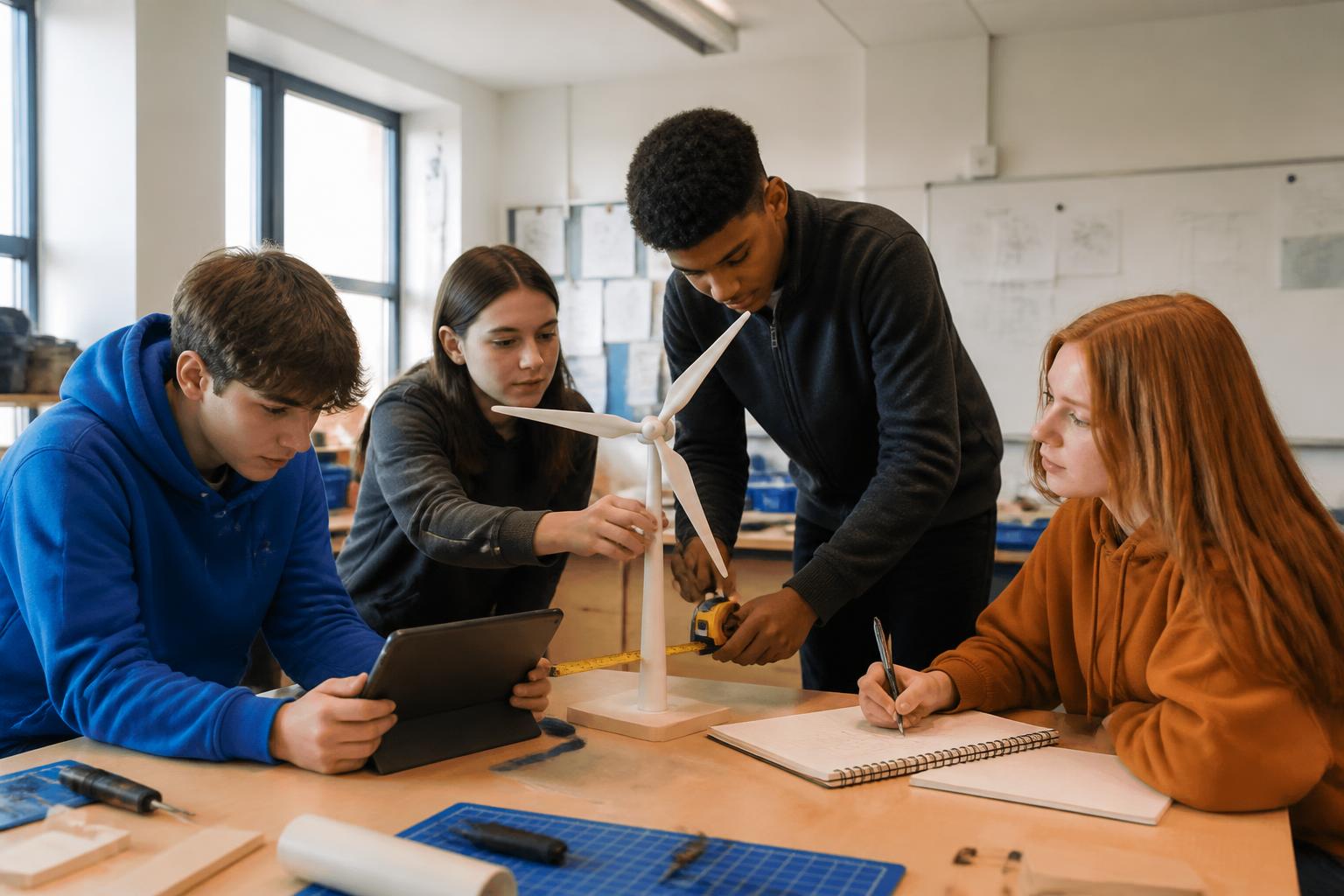
At Wild English School, we blend hands-on science and engineering challenges with natural language acquisition. Juniors learn English by doing, building, experimenting, and solving real-world problems together across our 1- and 2-week immersive programmes.
Every challenge is mapped to CEFR-aligned language outcomes, so fluency grows as a by-product of genuine curiosity — never from a textbook alone.
How it works
Three pillars of the STEM approach
Building through teamwork
Students tackle collaborative engineering tasks, like designing structures or eco-cities, naturally negotiating ideas, sharing vocabulary, and building fluency while constructing physical prototypes together.
Experiential science and inquiry
Hands-on environmental experiments and data collection get juniors speaking up. They hypothesize, test, and analyze outcomes out in the wild West of Ireland landscape.
Targeted functional language
Every STEM challenge maps directly to specific grammatical structures and vocabulary sets, ensuring active problem-solving drives authentic linguistic development throughout each 1- or 2-week stay.